


BitMine Sets 5% Cap on Ethereum Treasury Holdings
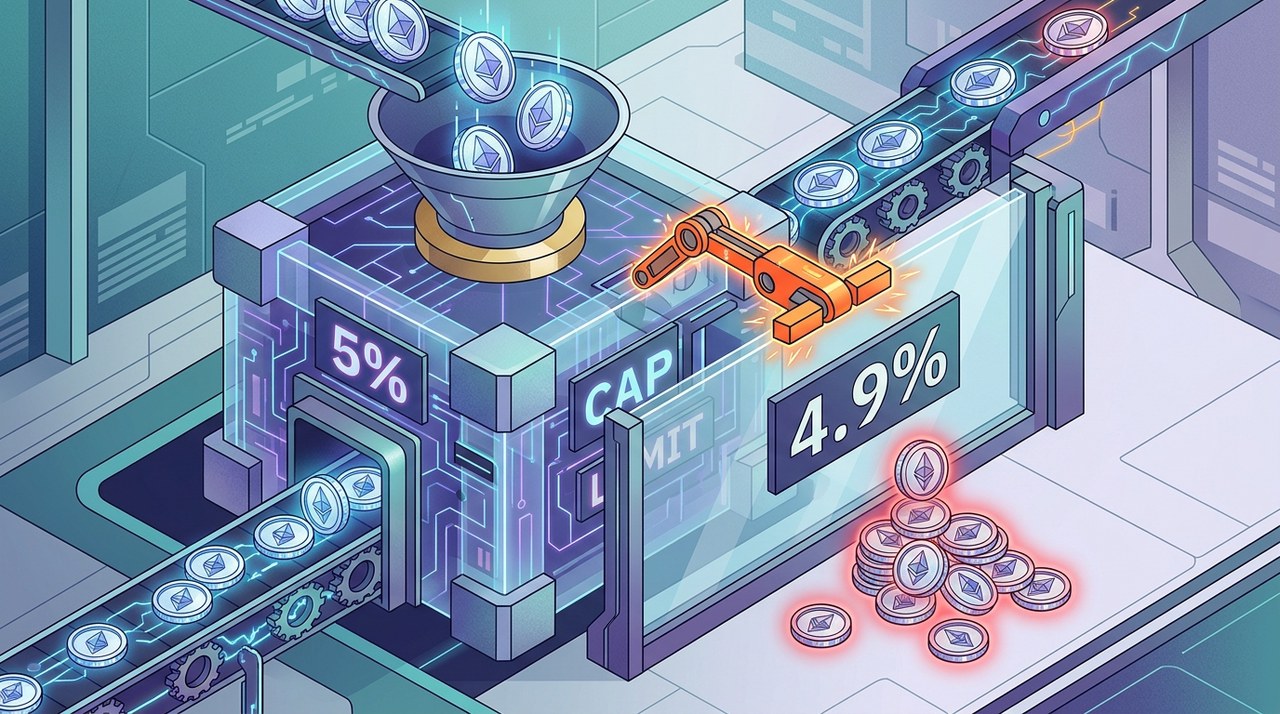
Bit Mine Approaches Its Self-Imposed 5% EthereumETH-5.20% Cap
Picture this: a major investment firm buys so much of a cryptocurrency that it eventually decides it has reached its absolute limit. That is precisely what is happening with Bit Mine Immersion Technologies, led by Chairman Tom Lee. The company has officially announced that it is getting ready to hit the brakes on its aggressive Ethereum (ETH) buying spree once it hits a firm 5% cap of the token's total circulating supply.
For the past 15 months, Bit Mine has been quietly accumulating billions of dollars in Ethereum. However, speaking at the Token2049 conference in Singapore, Tom Lee made the company's future strategy crystal clear to attendees and investors alike. He emphasized that once Bit Mine hits its target, there will be no expanding the goalpost.
That's a hard cap. We're not gonna be accumulating past 5%.
This statement marks a pivotal moment for both Bit Mine and the broader cryptocurrency market. For over a year, institutional buying from corporate treasuries has provided significant price support for Ethereum. Knowing that one of the largest corporate buyers is wrapping up its accumulation phase gives investors plenty to think about.
Breaking Down the Numbers: How Much ETH Does Bit Mine Hold?
To truly understand the scale of Bit Mine's holdings, it helps to look at the numbers behind their corporate balance sheet. Ethereum currently has a total circulating supply of roughly 122.1 million tokens. Bit Mine's corporate treasury is already packed with a massive percentage of that supply.
Here is a clear breakdown of where Bit Mine's Ethereum treasury stands today:
- Current ETH Holdings: 6,016,414 ETH
- Percentage of Total ETH Supply: Approximately 4.9%
- Remaining ETH to Reach 5% Cap: 88,586 ETH
- Estimated Cost for Remaining ETH: Around $240 million
- Total Corporate Holdings Value: Approximately $17.4 billion
Bit Mine is just 88,586 ETH away from hitting its target cap. At current market rates, purchasing those final tokens will cost the firm around $240 million. Once that purchase is complete, Bit Mine will officially control 5% of all Ethereum tokens in global circulation.
Besides its massive Ethereum stack, Bit Mine's total corporate value stands at approximately $17.4 billion. This total treasury evaluation includes its vast ETH holdings, $643 million in liquid cash reserves, and strategic equity stakes in companies like Beast Industries and Eightco Holdings.
The Alchemy of 5% Strategy: Buying Through the Bear Market
So, why did Bit Mine set out to buy 5% of all Ethereum in the first place? The initiative was dubbed the Alchemy of 5% accumulation strategy. It was launched 15 months ago during a time when crypto markets were struggling through a deep prolonged bear market.
When market prices drop and sentiment turns negative, many retail investors panic and sell. Institutional buyers with long-term capital, however, often see these downturns as prime buying opportunities. Bit Mine deliberately accumulated its massive ETH position while market prices were depressed, effectively soaking up sell pressure across the market.
We did all this buying in a bear market. We protected the downside for ETH because we were buying. But now, we're done stacking in front of a 25X move.
By steadily purchasing millions of tokens during market stress, Bit Mine helped establish downside support for Ethereum. Now that the target is within arm's reach, Tom Lee feels the accumulation phase has successfully fulfilled its purpose. The strategy is now evolving from accumulating assets to generating consistent yields from those assets.
Shifting Gears: Earning Yield Through Ethereum Staking
Once Bit Mine stops buying Ethereum, what will it do with all those tokens? The answer lies in Ethereum's native yield mechanism: Staking.
Unlike traditional Proof-of-Work networks like BitcoinBTC-3.50%, Ethereum operates on a Proof-of-Stake consensus model. This allows token holders to lock up their ETH to support network security and validate transactions. In return for performing this service, stakers earn rewards paid in additional ETH—similar to earning interest on cash reserves or collecting rental yield on physical property.
Bit Mine is not letting its multi-billion-dollar treasury sit idle. The company has already transitioned the vast majority of its ETH into yield-generating validator nodes:
- Staked ETH Amount: 5,067,309 ETH (representing roughly 84% of its total ETH treasury)
- Validation Infrastructure: Managed via the Made in America Validator Network (MAVAN)
- Current Reward Rate: 7-day annualized yield of 2.63%
- Projected Annual Income: Approximately $363 million in staking revenue
By generating roughly $363 million in projected annual rewards, Bit Mine creates a sustainable, recurring revenue stream without selling off its underlying assets. This strategic shift also benefits Bit Mine shareholders because the company will no longer need to dilute equity or issue debt to fund further crypto purchases.
Note: Staking yields are variable and subject to change based on overall network activity, validator participation, and broader market conditions.
Immediate Market Impact: ETH Price Drops and Liquidations Spike
Whenever a major market player makes a major operational announcement, trading markets react quickly. Shortly after Tom Lee revealed that Bit Mine would soon stop buying Ethereum, the asset experienced swift downward price pressure.
Ethereum's price slipped by nearly 5%, falling to $2,585.94. While a 5% price swing is common in digital asset markets, the rippleXRP-3.41% effects across derivative trading venues were significant.
As prices dropped, leveraged traders who had bet on immediate price increases found themselves forced out of their positions. This triggered a cascade of forced liquidations across major exchanges:
- Total ETH Liquidations: $216.56 million within a 24-hour period
- Long Positions Wiped Out: 97% of total liquidations came from bullish long traders
- Short Positions Liquidated: Only 3% of liquidations came from bearish short traders
When corporate treasuries announce they are winding down buying programs, short-term traders often interpret it as a temporary loss of buying demand. This psychological shift can spark short-term price pullbacks, even if the underlying network remains fundamentally sound over the long term. Crypto assets remain inherently volatile, and investors should expect price fluctuations.
Disclaimer: Past performance of digital assets or corporate treasury strategies is not an indicator or guarantee of future returns.
What Is Next for Ethereum? Key Technical Milestones Ahead
Although Bit Mine's accumulation phase is reaching its conclusion, Ethereum's core open-source development continues to move forward. Crypto analysts and node operators are turning their attention to upcoming technological upgrades that could shape the network's long-term efficiency.
Two major technical developments currently monitored by the community include:
- The Glamsterdam Upgrade: A scheduled protocol enhancement designed to refine transaction processing, improve execution efficiency, and lower gas costs across the Ethereum ecosystem.
- The Hoodi Testnet: An experimental test environment created for developers to stress-test core protocol features and smart contract functionalities before mainnet deployment.
Upgrades like Glamsterdam and testing environments like Hoodi demonstrate that Ethereum's development roadmap continues to move forward behind the scenes. While institutional buying patterns heavily influence short-term price movements, network upgrades drive long-term technical utility.
Final Thoughts for Everyday Investors
Bit Mine's decision to cap its Ethereum treasury at 5% represents a natural evolution for institutional crypto investors. Moving from aggressive accumulation during bear markets to steady cash-flow generation through native staking highlights how corporate treasuries mature over time.
While the crypto market experienced brief volatility following Tom Lee's announcement, the strategy establishes a clear operational framework for Bit Mine's multi-billion-dollar balance sheet. Market observers will undoubtedly keep an eye on how Bit Mine executes its remaining 88,586 ETH purchases and how its MAVAN validator operations perform moving forward.
Latest blog posts

Why Did Bitcoin Drop Below $62K? The Hidden IPO Connection
Bitcoin fell below $62,000 following liquidations and market stress. Analysts point to a massive upcoming AI IPO that might be draining market liquidity.
|
How Low Can Bitcoin Go? 3 AI Models Share Price Targets
Bitcoin recently experienced sharp price swings, dropping from $81,000 to near $65,000. Here is how three major AI models analyze potential targets moving forward.
|