


Bitcoin Privacy Without Base Layer Changes: Stacks Founder Explains
Bitcoin Privacy: Can We Have both Confidentiality and Transparency?
Bitcoin is famous for being an open and transparent public ledger. Anyone in the world can trace transaction histories and verify the total supply of coins at any time. However, as interest in privacy-focused cryptocurrencies like Zcash continues to grow, many crypto users wonder if Bitcoin could ever offer built-in privacy features of its own.
In a recent interview with Scott Melker, Stacks co-founder Muneeb Ali addressed this exact question. He explained that Bitcoin can indeed support private, confidential transactions without sacrificing the core auditability of its monetary supply. The key, according to Ali, lies in building privacy onto secondary layers rather than altering Bitcoin's underlying base layer.
Why Bitcoin's Base Layer Must Remain Fully Auditable
Bitcoin's base layer, often called Layer 1, serves as the primary foundation of the network. It enforces the famous 21 million coin supply cap. If privacy mechanisms were added directly to Layer 1, verifying the exact number of Bitcoins in circulation could become difficult or impossible.
We’re not going to get privacy directly at the Bitcoin base layer, nor do I think we should, because Bitcoin supply should be auditable.
To understand why this matters, imagine a national central bank where no one can check how many physical bank notes exist. Without clear auditability, users could not verify whether hidden inflation or improper minting was occurring. For Bitcoin, maintaining total monetary transparency on the base layer is essential for user trust.
The Role of the Execution Layer in Privacy
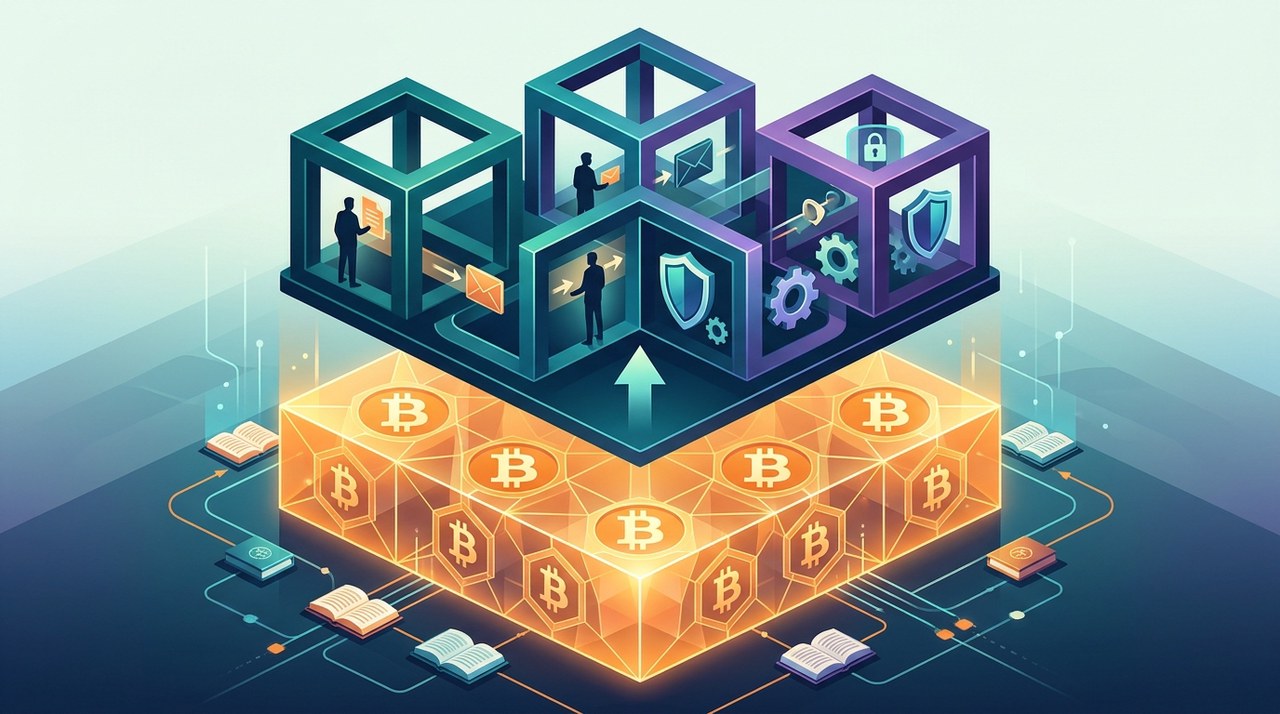
While the base layer keeps track of global coin supply, an execution layer—also known as Layer 2—can handle complex smart contracts, faster transactions, and confidential transfers. Execution layers operate on top of Bitcoin, processing transaction details off the main chain while using the security of the main network for final settlement.
You should be able to audit that this is the total number of coins in circulation. But you can absolutely have confidential transactions on the execution layer. Nothing is stopping you from doing it. So that’s also on our roadmap.
By executing confidential transactions on Layer 2, individual transaction amounts and addresses can be kept private from public view. Meanwhile, the base layer continues to ensure that the total pool of Bitcoins remains exact and mathematically verifiable.
Stacks Roadmap: Three Key Focus Areas
Stacks is a layer-2 network designed to bring smart contracts and decentralized applications to Bitcoin. Its goal is to make BTCBTC-1.39% faster, cheaper, and fully programmable. During the interview, Ali highlighted three critical priorities for the network's ongoing development:
- Confidential Transactions: Bringing optional privacy tools to Bitcoin users at the execution layer without altering Layer 1.
- Productive Bitcoin Utility: Developing applications that allow users to generate yield on their BTC holdings through decentralized applications.
- Quantum Resistance: Preparing Bitcoin's overall ecosystem against future security threats posed by powerful quantum computers.
While yield-generating applications offer new ways to put idle Bitcoin to work, market participants should remember that participating in decentralized protocols carries inherent technical, smart contract, and market risks.
Quantum Computing and the Accelerated 2029 Timeline
Quantum computing represents a potential long-term threat to modern public-key cryptography, including the signature algorithms that secure Bitcoin addresses. Traditional cybersecurity organizations, such as the National Institute of Standards and Technology (NIST), have set 2030 as a target date for implementing quantum-resistant standards.
However, Muneeb Ali believes that target date may be too distant. He warned that rapid advances in artificial intelligence could accelerate quantum computing developments faster than previously expected. As a result, Ali suggested that 2029 is a more appropriate target for preparedness.
Upgrading Bitcoin is intentionally conservative and slow. Implementing major network upgrades usually takes several years of technical development, testing, and broad community consensus.
Ali pointed out that reaching consensus could become particularly contentious when deciding how to protect Satoshi Nakamoto's estimated stash of unmoved Bitcoins. Determining how to safeguard or handle long-dormant coins against potential quantum vulnerabilities could spark significant debate across the Bitcoin community.
Open-Source Security, AI Threats, and High-Profile Hacks
Beyond quantum computing, the interview explored immediate security challenges facing the digital asset industry. Ali emphasized the importance of continuously strengthening Bitcoin's underlying software.
In open-source software development, code is publicly accessible for anyone to inspect. When numerous independent developers continuously review and test the software, vulnerabilities can be identified and patched before malicious actors can exploit them.
The discussion also covered the recent Binance security incident, where attackers stole $6.3 billion. During that event, more than half of the stolen funds were successfully frozen on-chain through swift industry coordination.
The Federal Bureau of Investigation (FBI) attributed the security breach to cyberCYBER+21.92% actors linked to North Korea. However, officials in Pyongyang denied involvement, stating that the United States was fabricating allegations to provoke political tension.
Ali commended Binance for its crisis management during the incident. At the same time, he cautioned that AI-assisted cyberattacks will make future breach attempts more sophisticated. To counter these evolving vectors, financial platforms must implement defensive systems backed by AI security technology.
Looking Ahead: The Future of Bitcoin Layer 2s
The approach outlined by Stacks offers a potential roadmap for Bitcoin's ongoing evolution. By keeping Layer 1 focused strictly on security, decentralization, and public supply verification, Layer 2 networks can innovate freely above it.
Adding confidential transactions and expanded utility to Bitcoin could broaden its overall use cases. However, whether layer-2 networks like Stacks can seamlessly deliver these advanced privacy features at scale remains an ongoing technical effort for the industry to monitor.
Latest blog posts

Bitcoin Hits 82-Day Low as Leverage Builds Near $72,936
Bitcoin fell to an 82-day low near $72,936 as futures leverage climbs, creating conditions for potential market volatility.
|

Tom Lee: Ethereum Stagnation Driven by Investor Impatience
Fundstrat founder Tom Lee argues Ethereum's weak price performance stems from short-term impatience, pointing to strong underlying network adoption.
|

 +2
Crypto Savings Accounts: 6 Exchange Earn Platforms Compared
A friendly guide comparing flexible, fixed, and real-world asset savings yield options across six major centralized crypto exchanges as of November 2026.
|