
Bitcoin Dips Below $84K as Crypto Liquidations Hit $555M
What Happened in the Crypto Market?
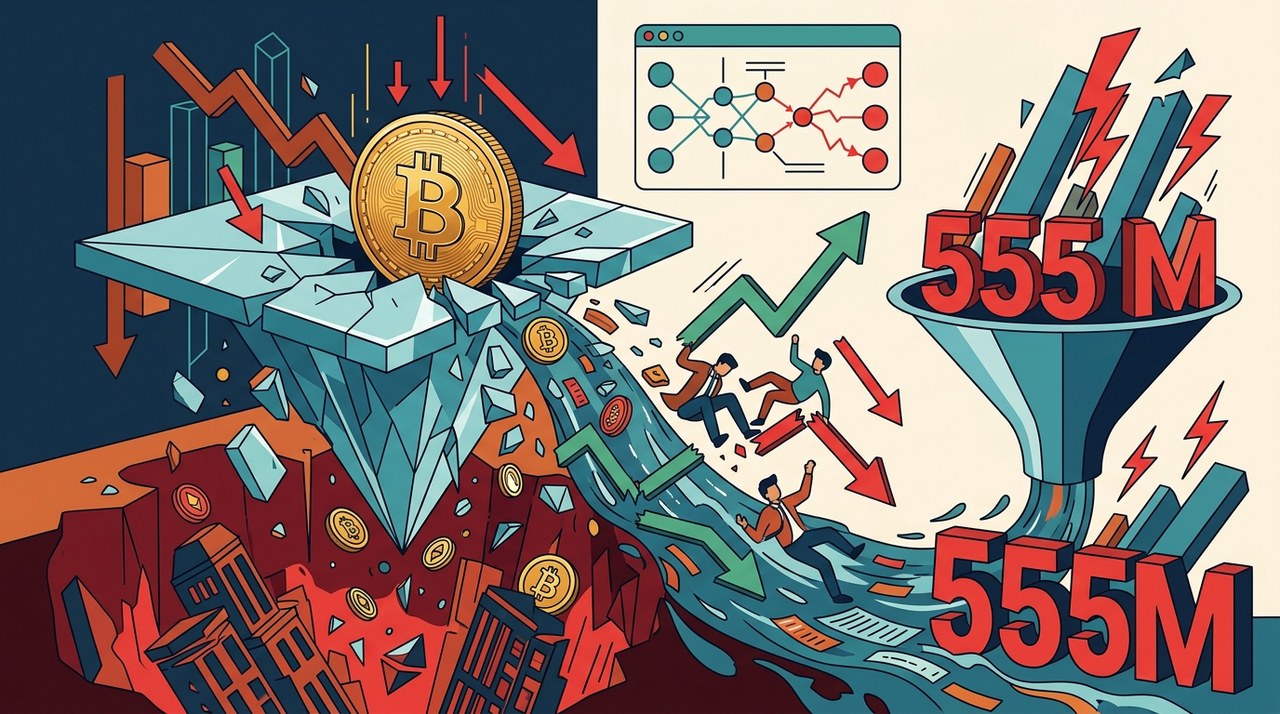
BitcoinBTC-2.53% recently experienced a quick dip below the $84,000 price level. This sudden price move triggered a massive wave of forced position closures across the crypto market.
Data from analytics platform CoinGlass shows that total crypto liquidations reached an impressive $555.6 million within a single 24-hour period.
The vast majority of these losses hit bullish traders who were betting on prices going higher. Traders holding long positions accounted for $487.2 million of the total wiped out.
Understanding Crypto Liquidations: How It Works
If you are new to crypto, the term liquidation might sound complicated. Let us break it down into simple terms.
A liquidation happens when a trader uses borrowed money, known as leverage, to open a larger trade than their cash balance allows.
Think of leverage like driving a fast sports car. It can help you reach your destination much quicker, but any mistake makes a crash far more sudden.
- A trader places collateral down to open a leveraged position.
- They borrow extra funds from the trading platform to boost position size.
- If the market moves against their trade beyond a safety limit, the exchange automatically closes the order to protect the borrowed money.
When the exchange closes those trades automatically, it sells off those assets immediately on the open market.
Long vs. Short Positions: Why Bullish Traders Got Hurt
In crypto trading, investors generally take one of two positions when placing leveraged bets on future prices.
What is a Long Position?
Opening a long position means you expect the asset price to go up. If the price increases, you profit. But if the price drops, your trade loses money.
What is a Short Position?
Opening a short position means you expect the asset price to fall. You profit when prices fall, but lose money when prices rise.
Because Bitcoin slipped below $84,000, traders expecting the market to climb were caught off guard. Their long trades hit safety limits, forcing exchanges to sell.
Out of the total $555.6 million liquidated in 24 hours, long trades made up $487.2 million. That means over 87% of all wiped-out trades were bullish bets.
The Effect of Leverage and Market Volatility
Why do liquidations happen so fast? The answer lies in how automated selling orders interact with market order books.
When many long positions get liquidated at once, exchanges push heavy sell orders into the market. This sudden selling pressure pushes prices down further.
That lower price then hits the liquidation price of the next group of traders. This chain reaction is known as a liquidation cascade.
This quick cycle explains why even a minor price movement past key levels like $84,000 can erase hundreds of millions of dollars in moments.
What Is CoinGlass and Why Does Its Data Matter?
The liquidation figures in this report come from CoinGlass, a widely used cryptocurrency futures and market data platform.
CoinGlass tracks live trading statistics across major crypto exchanges globally, including Binance, OKX, and Bybit.
By combining data from multiple platforms, CoinGlass gives traders a clear view of market leverage, open contracts, and total liquidations.
Managing Risk in Digital Asset Markets
Market events like this highlight how quickly conditions can shift in cryptocurrency markets. Sudden drops can occur during high volatility periods.
Using leverage offers larger upside potential, but it also drastically increases the risk of fast capital loss when prices move unexpectedly.
Experienced traders focus heavily on risk management. Common strategies include setting stop-loss levels, keeping leverage low, and avoiding overly emotional trades.
Past performance of digital assets is not a guarantee of future returns. You can track real-time price trends and market stats directly on Bitkub Market.
Latest blog posts


CFTC Approves Crypto for Exchange Operating Reserves
CFTC staff issued guidance letting regulated derivatives exchanges count Bitcoin, Ether, and stablecoins toward 12-month operating reserve requirements.
|
CleanSpark Posts $987 Million Loss Amid Pivot to AI
Bitcoin miner CleanSpark reported a $987 million annual loss and a 25% revenue drop as it shifts toward AI infrastructure.
|

Stanford Researchers Unveil Praxis Encryption for Bitcoin
Researchers from Stanford and Byzantine Research unveiled Praxis, a witness encryption breakthrough that could enable trustless Bitcoin bridges and smart contracts.
|