Bank of Korea Rate Hike: Can Microchips Save KOSPI?
What Happened with South Korea's Interest Rates?
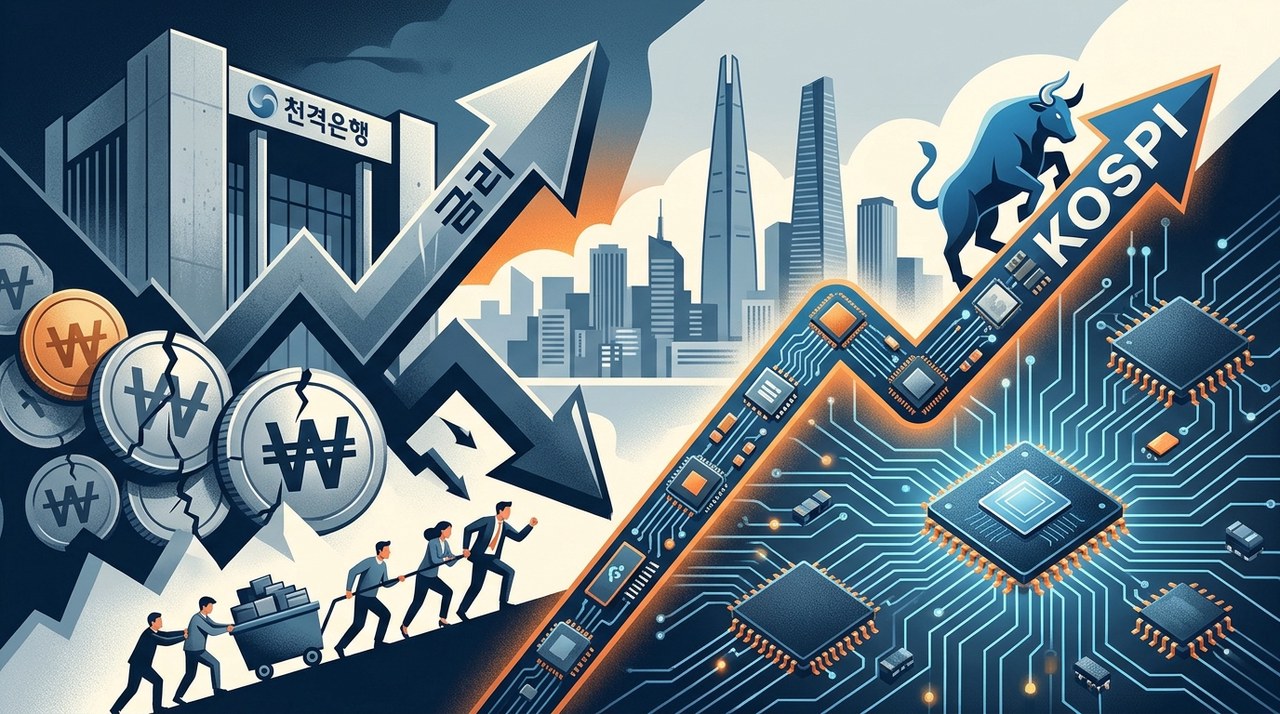
The Bank of Korea made a major policy move on Thursday by raising its benchmark interest rate by a quarter of a percentage point.
This decision pushed the country's official interest rate up to 3.25%.
Higher interest rates mean borrowing money gets more expensive for everyday consumers and business owners across the nation.
This action marks the central bank's third rate increase since July.
Policymakers acted because inflation remains persistent. South Korea recorded an October inflation rate of 2.8%, staying above the central bank's 2% official target.
Why Did the KOSPI Stock Market Drop?
Stock markets often experience volatility when central banks raise interest rates. South Korea's benchmark index, the KOSPI, felt immediate pressure.
The main stock index is currently sitting roughly 48% below its record high set back in June.
On Wednesday, just before the rate announcement, heavy selling dragged the KOSPI down by 6.16%.
The index closed Wednesday at 4,697.51, which was its weakest level since Jan. 13.
However, the market saw a brief rebound on Thursday morning right after the rate hike, with the KOSPI rising nearly 2% as of writing.
Semiconductor Giants Carry Massive Weight on the Index
To understand South Korea's stock market swings, you have to look at its giant memory chip manufacturers.
Two dominant players, Samsung Electronics and SK Hynix, hold massive influence over local market movements.
Back in June, these two semiconductor leaders accounted for more than half of the entire KOSPI index weighting.
When chip stocks take a hit, the broader stock index feels the impact immediately.
During Wednesday's selloff, Samsung Electronics shares sank 9.87%, while SK Hynix fell 11.05%.
South Korea's Export Boom and Chip Demand
Despite stock market turbulence, South Korea's underlying economy showed solid momentum in the third quarter.
Gross domestic product (GDP) grew 3.4% year-on-year in Q3, topping earlier economic forecasts according to CNBC.
Semiconductors remain the primary engine powering South Korea's international trade.
Data from the Korea Customs Service revealed that microchips made up 49.7% of total exports during the first 20 days of November.
Chip shipments almost quadrupled during that timeframe, reaching an all-time record of $38.5 billion.
Why High Interest Rates Drag on Stock Valuations
Even with strong semiconductor sales, official inflation projections suggest high interest rates could stay around for longer.
The Bank of Korea estimates inflation will reach 2.4% in 2027 and 2.1% in 2028.
Because both figures remain above the central bank's 2% target, benchmark rates may need to stay above 3%.
When interest rates stay elevated, investors tend to reduce what they are willing to pay today for future corporate earnings.
This valuation math puts extra pressure on fast-growing tech companies like chipmakers.
Foreign Outflows and New Government Support Measures
Foreign investors responded to the changing landscape by pull funds out of the local market.
According to data from Seoul Economic Daily, foreign net selling reached 1.95 trillion won.
This heavy selling wiped out all the buying gains made during the previous trading session.
To support stock prices, South Korean financial authorities announced protective steps.
Regulators loosened company share buyback limits for three months starting Nov. 24 to encourage corporate stock purchases.
What History Tells Us About South Korea's Rate Cycles
Looking back at historical rate cycles offers clues about how markets might behave next.
In August 2021, the Bank of Korea delivered its first rate hike in nearly three years.
Following that decision in 2021, the KOSPI index trended lower, while the South Korean won (KRW) gained strength.
If that historical trend repeats, signals of further interest rate hikes could weigh on equity valuations while supporting currency value.
Keep in mind that past performance in financial markets does not guarantee future results.
What Lies Ahead for South Korea's Economy?
Market analysts are watching closely to see where rates will top out.
A survey of 10 local brokerages showed that most analysts expect interest rates to peak at 3.50%.
However, that outlook could change if the central bank governor signals that tightening is near an end, or if global chip demand cools off.
Right now, South Korea's rate trajectory is tied to the global artificial intelligence spending boom.
If strong demand for AI hardware continues, robust exports can justify higher rates. But if chip demand slows, central bankers may be forced to rethink their policy path.
Latest blog posts
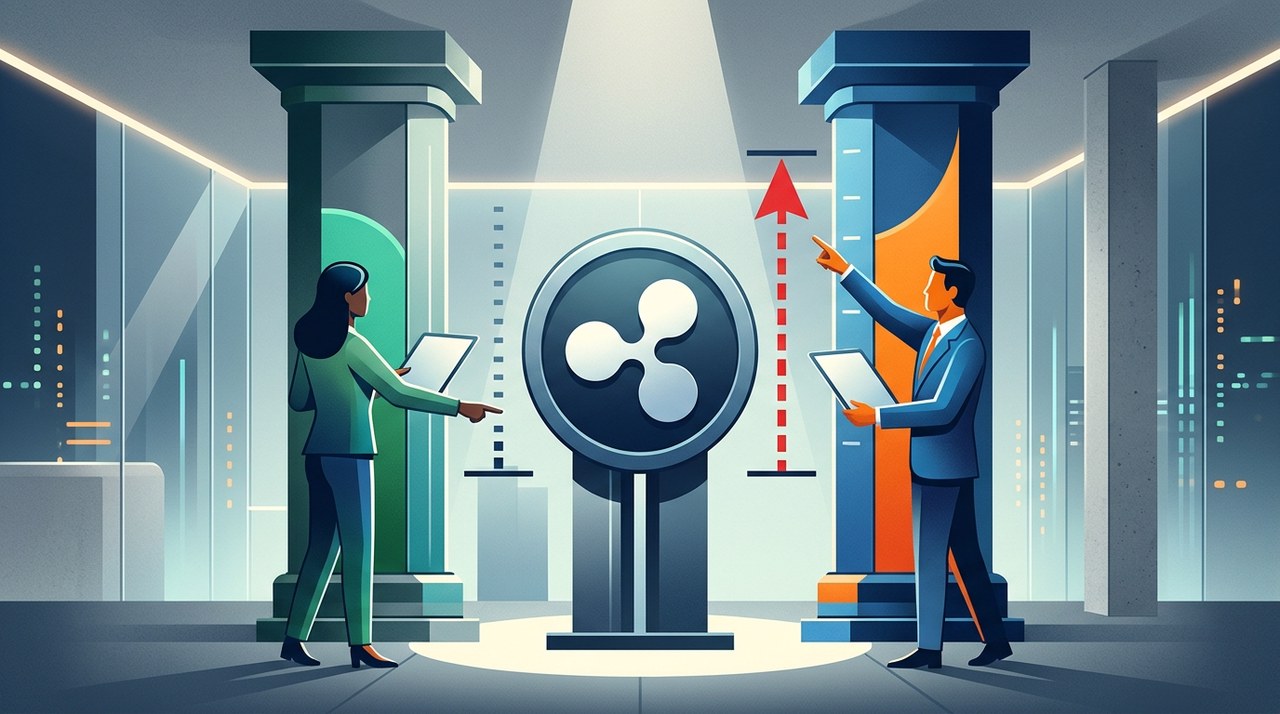

SEC Filings Show Huge 70% Gap in Ripple Stock Valuation
Two SEC-registered funds valued Ripple stock at $90 and $300 per share on Sept. 30, revealing a massive valuation split.
|

Galaxy Revises Bitcoin Outlook as Key Support Level Comes Into View
Galaxy Digital has updated its Bitcoin forecast, warning that a daily close below $58,525 could trigger further market declines.
|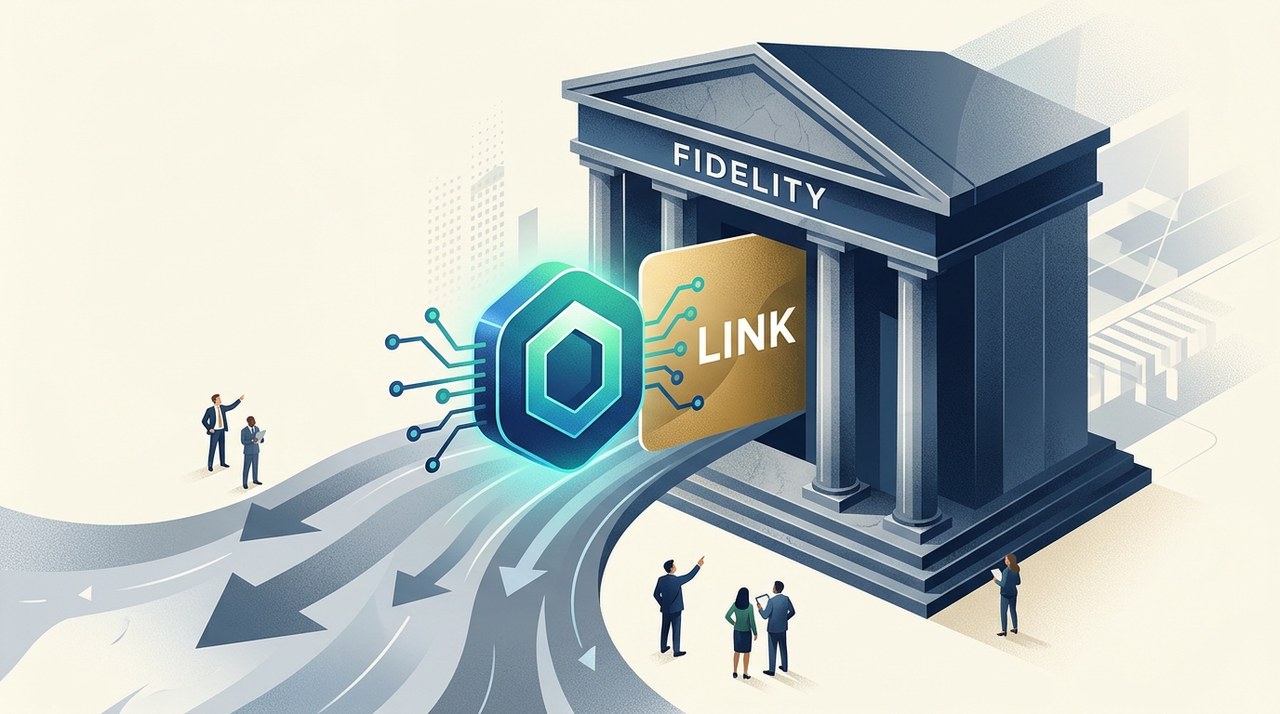

Fidelity Files for Chainlink ETF Despite Recent Outflows
Fidelity has submitted an SEC filing for a spot Chainlink ETF, even as existing LINK products experience monthly net outflows amid a broader market slowdown.
|