

Aztec Rolls Out Tierra Upgrade for Speed and Security
What is the Aztec Tierra Upgrade?
Aztec, a privacy-focused network built on EthereumETH+0.31%, has officially launched a major system update named Tierra.
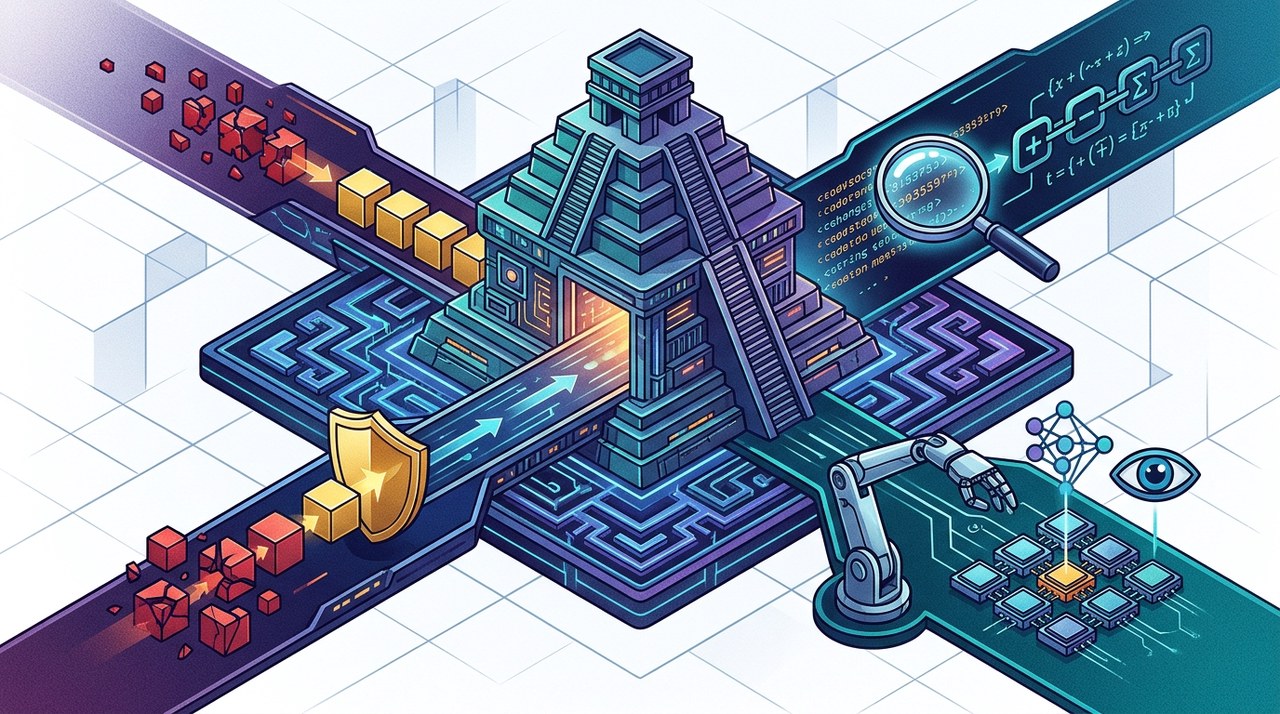
This update introduces three key improvements to the network. It resolves a critical bug found in the prior software version, adds formal mathematical verification to the system, and implements an automated AI testing harness.
Together, these changes aim to make the privacy network both faster and significantly more secure for users and developers.
Resolving Critical Software Vulnerabilities
In blockchain development, software bugs can lead to serious security risks if left unaddressed.
The Tierra release directly fixes a critical issue identified in Aztec's previous software version.
By patching this flaw, the development team has reinforced the underlying code base, helping ensure that network operations remain stable and secure.
Understanding Formal Verification in Blockchain Security
One of the standout features of the Tierra upgrade is the introduction of formal verification.
Traditional software testing involves running code through various scenarios to see if anything breaks. However, this method can miss hidden flaws.
Formal verification works differently. It uses mathematical proofs to prove that a piece of software strictly adheres to its intended design under all possible conditions.
Think of it like checking an equation in geometry. Instead of testing a few sample numbers, you prove the mathematical rule applies universally.
For complex cryptographic systems like Aztec, formal verification offers mathematical certainty that key system components behave exactly as expected.
How AI-Powered Testing Strengthens Code
Alongside formal mathematical proofs, Aztec is leveraging artificial intelligence to maintain continuous security.
The Tierra upgrade integrates an AI-powered testing harness. This system automatically generates complex testing scenarios to stress-test the network.
- Continuous Monitoring: The AI runs tests constantly without requiring human oversight.
- Edge-Case Detection: It simulates unusual user behaviors to uncover obscure edge cases.
- Faster Iteration: Developers can fix potential issues before code reaches production environments.
Combining formal verification with AI testing creates a multi-layered defense mechanism for the protocol.
Why Privacy and Speed Matter on Ethereum
Public blockchains like Ethereum are transparent by default. Every transaction, wallet balance, and smart contract interaction is publicly visible.
Aztec works to bring confidential transactions to Ethereum by using zero-knowledge proofs (ZK proofs).
ZK cryptography allows users to prove a transaction is valid without revealing sensitive data, such as wallet addresses or transaction amounts.
However, zero-knowledge calculations can be computationally heavy, which sometimes slows down network performance.
The Tierra upgrade optimizes these processes, aiming to increase execution speeds while preserving strict data privacy.
Looking Forward
The rollout of Tierra represents an important step in Aztec's ongoing development roadmap.
As privacy-focused Layer 2 solutions mature, robust security mechanisms like formal verification and AI-assisted testing are becoming standard practice.
These technical upgrades help build a safer environment for developers looking to deploy encrypted smart contracts on Ethereum.
Latest blog posts


Crypto and US Midterms: What Is at Stake?
Crypto groups spent $176 million on the US midterm elections as congressional control and digital asset laws hang in the balance.
|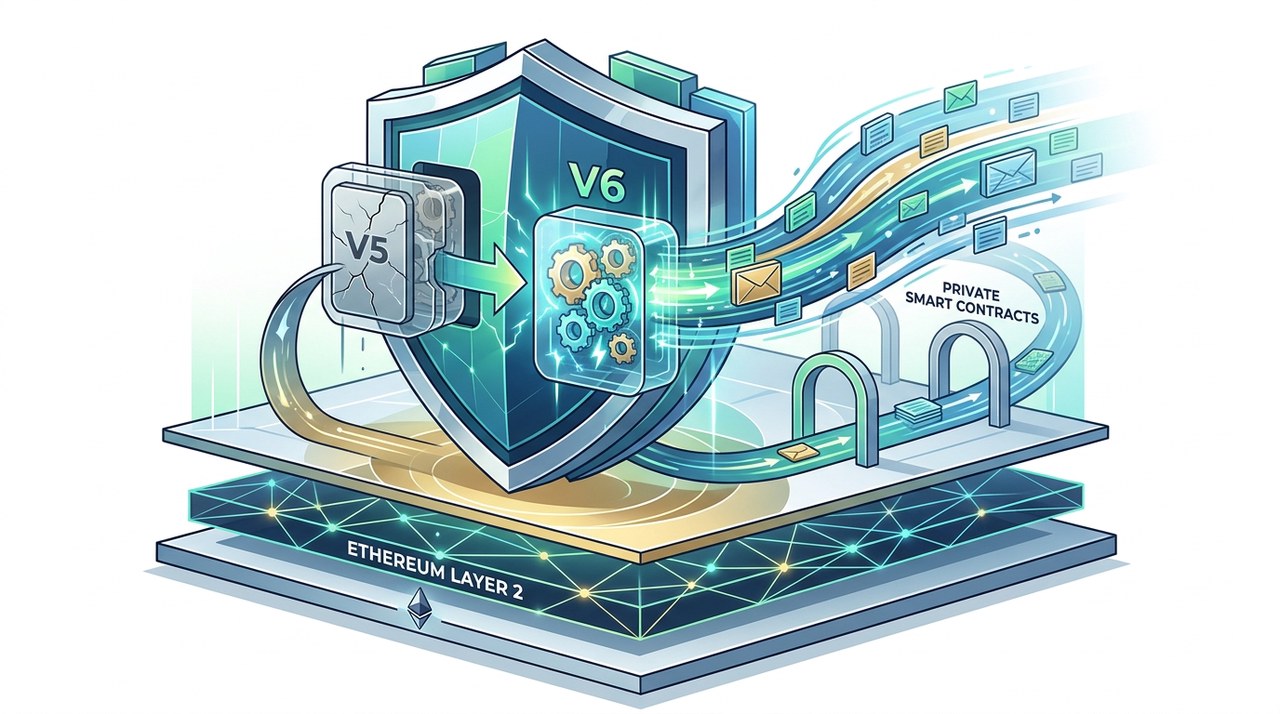

Aztec Upgrades Layer 2 Network with Tierra V6
The Aztec Foundation released Tierra V6, resolving past security issues and doubling the speed of private transaction proof generation.
|
LO:TECH Raises $12M to Expand Crypto Trading to US and Asia
LO:TECH has secured $12 million in funding to expand its crypto trading operations into the U.S. and Asia, focusing on tokenized stock trading.