

API3 Caps Token Supply at 200 Million to Focus on AI
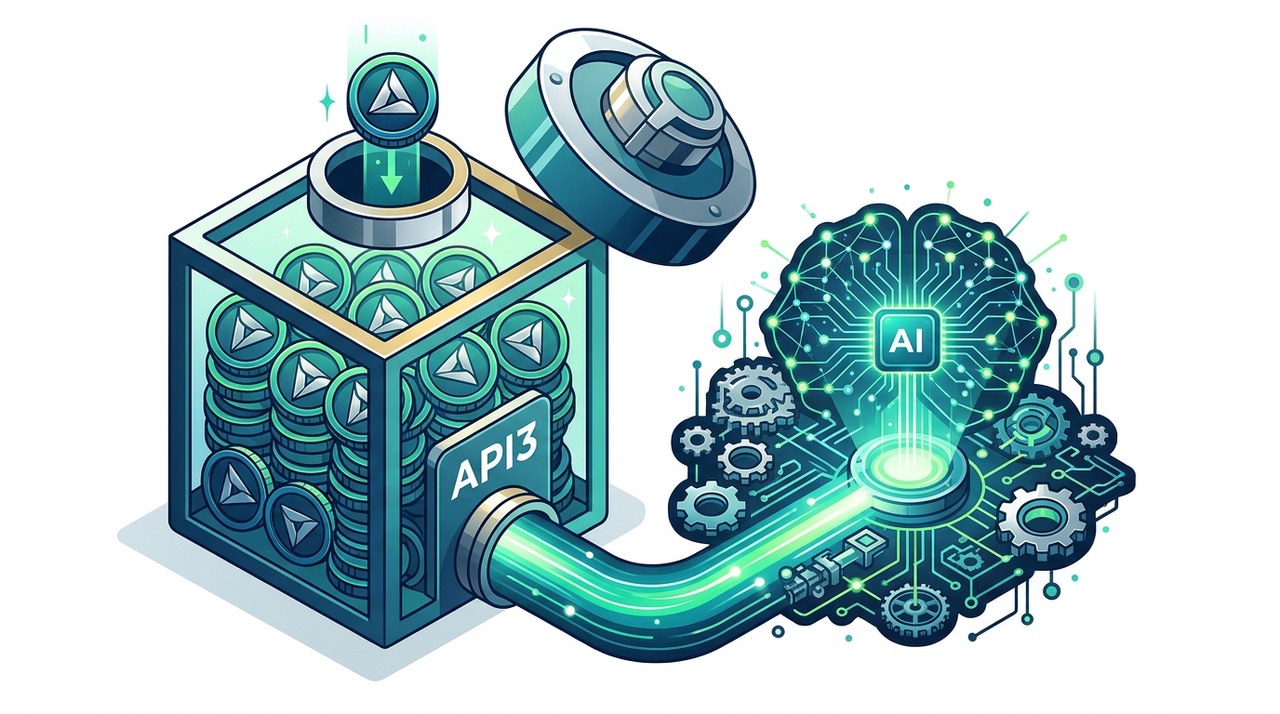
API3API3+0.00% Caps Token Supply at 200 Million and Ends Emissions
API3 is making a major shift in its economic model. The blockchain data provider has permanently capped its total token supply at 200,000,000 API3 tokens.
This decision officially ends five years of continuous token emissions. To ensure no new tokens can ever be created, the team transferred ownership of the token contract to a dead address.
Before this update, the token supply was listed as effectively unlimited. Over the past five years, the API3 staking pool minted about 90 million tokens. That represented nearly 47% of today's supply, growing at a pace of roughly 950,000 tokens every week, or about 26% annually.
To complete the supply hard cap, API3 conducted one final minting event. This brought the total supply to exactly 200,000,000 tokens. From this point forward, the minting function is completely removed, meaning no new API3 can ever be created.
A Simplified Governance Model for Token Holders
Along with fixing the token supply, API3 is upgrading how community governance works. The protocol is moving away from its original five-year-old smart contracts to a simpler voting system.
Under the new model, every single API3 token counts as one vote. It does not matter whether tokens are staked in a protocol contract or held directly in a personal wallet.
The community votes on proposals through the API3 DAO. Designated multisignature signers then execute whatever token holders approve. This creates a cleaner and more transparent governance process for the community.
Where API3 Goes Next: Curation and AI Infrastructure
With its supply cap locked in place, API3 is concentrating on applying its five years of API and decentralized finance (DeFi) experience to new growth areas. Two key initiatives show where the project is heading.
1. Curation: On-Chain Lending Markets with Balance Sheet Capital
The first major focus is Curation, which is API3's on-chain lending business. Curation manages markets using API3's own price feeds across networks like EthereumETH-3.03%, Base, and Robinhood Chain.
These markets operate by capturing Oracle Extractable Value (OEV). When price feeds update, value is created from market movements, and Curation routes this recovered value back to those markets.
What sets this design apart is that API3 puts its own treasury balance sheet on the line. API3 acts as a primary liquidity supplier in the very markets it curates.
By putting its own capital at stake, API3 shares the exact same risks as individual users who deposit into these pools. Outside users can deposit funds on the very same terms.
As of late October, the protocol's curation vaults held approximately $20.5 million in total value.
2. AirnodeHub: Infrastructure for the Growing AI Agent Economy
The second initiative is AirnodeHub, which is now live in early access at airnodehub.api3.org. AirnodeHub expands API3's signed data model to the broader API market.
AI agents are automated software programs that browse the web, compare information, and conduct transactions on behalf of users. These agents now account for a large and growing share of overall internet traffic.
Many AI agents require high-quality, verified data and pay for it on a per-request basis. AirnodeHub gives data providers a platform to list their existing Web2 APIs.
Every response from an API on AirnodeHub is cryptographically signed using the provider's own key. An AI agent can discover an API, verify who stands behind it, request data, and check the signature before using it.
This is the exact same first-party signed-data approach that API3 has used for its financial data feeds since 2021.
Revenue Buybacks and Deflationary Token Design
API3 is aligning its token mechanics with real operational revenue. The project uses revenue generated from live operations to buy API3 tokens on the open market every month.
Currently, earnings from the Curation business and OEV activity fund these regular token buybacks. Once per-request payments go live on AirnodeHub, service fees from AI agent data calls are designed to add to token buybacks as well.
By pairing a hard-capped token supply of 200 million with ongoing market buybacks, API3 transitions from an inflationary token to a deflationary asset model over time.
However, investors should remember that digital assets involve market risks. Past performance of digital assets is not a guarantee of future returns, and token prices can fluctuate based on broader market conditions.
You can check historical price trends and market data for assets like API3 at bitkub.com/th/market/API3.
Leadership Voice on the Strategic Pivot
With supply fixed at 200,000,000, API3 can be judged on what it builds. We curate on-chain lending markets with our own capital at stake, and we're opening AirnodeHub so AI agents can find, verify and pay for data at its source. That's where this is going, and now the token is built for it.
This statement from Emanuel Tesar, Tech Lead at API3, highlights the project's goal. By fixing the supply, the project intends to focus entirely on building functional utility for both DeFi and AI economies.
Summary of Key Changes
- Total Supply Cap: Permanently set at 200,000,000 tokens with contract ownership sent to a dead address.
- Emissions Stopped: Ended five years of staking pool inflation that minted roughly 950,000 tokens weekly.
- Governance Update: Shifted to a 1 token = 1 vote structure across all held or staked tokens via the API3 DAO.
- Capital-Backed Curation: Running lending markets on Ethereum, Base, and Robinhood Chain with over $20.5M in vault capital.
- AI Integration: AirnodeHub enables AI agents to access, verify, and pay for cryptographically signed provider data.
- Revenue Buybacks: Monthly token buybacks funded by protocol operations replace previous inflationary reward mechanics.
Understanding First-Party Data Oracles
To understand why this shift matters, it helps to look at how smart contracts interact with data. Smart contracts on blockchains cannot naturally read information from the outside world, such as stock prices or real-time web data.
Oracles act as bridges that deliver off-chain data to the blockchain. Many traditional oracle networks rely on third-party middlemen to collect and deliver this data.
API3 takes a different approach called first-party data. Instead of using middlemen, API3 allows original data creators to host their own oracle nodes using Airnode technology.
This ensures data is signed directly at the source. It reduces potential tampering, lowers costs, and gives users direct access to trustworthy real-world information.
By extending this exact first-party approach to AI agents, API3 is expanding beyond smart contracts into the next generation of automated internet software. Readers interested in exploring the platform further can visit api3.org and airnodehub.api3.org.
Latest blog posts


Elon Musk Warns Scammers as X Wins $271K Fraud Case
X secured a default court judgment against two individuals accused of operating a $271,000 creator payout scheme using crypto content farms.
|
UniCredit Offers Bitcoin Exposure with Capital Protection
Italian banking giant UniCredit is launching a six-year investment product offering retail clients exposure to Bitcoin with principal protection and capped returns.
|
Bitcoin.com Opens Free Block Explorer API for AI Agents
Bitcoin.com launched a free API and MCP server, allowing AI tools like ChatGPT and Claude to read Bitcoin blockchain data in plain English.
|