
16-Year-Old Bitcoin Mined for Pennies Moves $8.5 Million
A Surprising Wake-Up Call from 2010
A fascinating piece of early Bitcoin history moved on Wednesday evening.
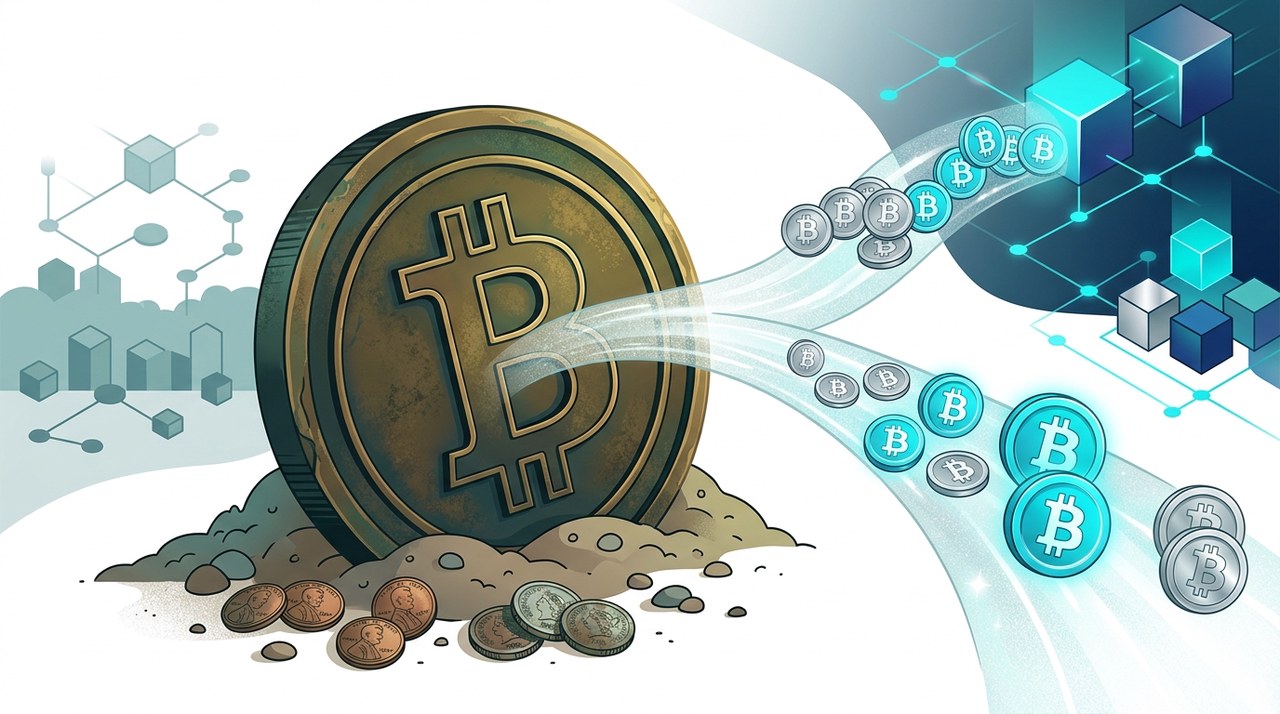
About 100.02 Bitcoin mined back in July 2010 was transferred to two new addresses after sitting idle for over 16 years.
When these coins were first created, Bitcoin was trading for roughly 6 cents per coin. That meant the entire stash was worth about $6 at the time.
Today, with Bitcoin trading around $83,000, those same coins carry a market value of approximately $8.5 million.
While this growth is impressive, investors should keep in mind that past performance of digital assets or past operational results are not an indicator of future performance.
Where Did These Early Bitcoins Come From?
On July 30, 2010, a miner successfully processed two blocks on the Bitcoin network.
Back in those days, the network rewarded miners with 50 newly created Bitcoins per block, along with minor transaction fees.
One block yielded 50 BTCBTC-1.93%, while the second yielded 50.02 BTC including network fees.
This period is widely known as the Satoshi era because Bitcoin's pseudonymous creator, Satoshi Nakamoto, was still active in the community.
However, experts emphasize that the age of the coins alone does not establish any direct link to Satoshi Nakamoto.
How Can a Wallet Spend Coins While Others Sit Still?
The transfer sparked curiosity online because this wallet was not entirely dormant over the past decade.
Blockchain records show the wallet owner spent 200 BTC in August 2015, 100 BTC in December 2017, and another 249 BTC in March 2018.
So how could the 100.02 BTC from July 2010 stay untouched while other funds were spent?
Think of a Bitcoin wallet like a safe filled with individual sealed cash envelopes.
In technical terms, Bitcoin records incoming payments as separate Unspent Transaction Outputs (UTXOs).
A wallet owner can open and spend cash from one envelope while leaving older envelopes sealed for years.
Galaxy Research, the research division of crypto firm Galaxy Digital, first spotted the movement on X. They confirmed that while the address had been used previously, these specific 2010 coins had never moved until now.
Breaking Down the $8.5 Million Transfer
Wednesday's transaction combined the original 100.02 BTC payout with six tiny later deposits.
The total balance was then split across two destination addresses:
- 10 BTC was transferred to one wallet address.
- Approximately 90.02 BTC was sent to a second wallet address.
Public ledgers show where the coins moved, but they do not reveal who controls those addresses or if the owner plans to sell.
As of Thursday morning, neither of the new receiving wallets had spent any of the funds.
Why Do Market Analysts Care About Dormant Coins?
Crypto traders monitor old wallet movements closely because coins inactive for years are often presumed lost.
When a dormant wallet suddenly becomes active, it proves the owner still possesses the private keys.
If long-term holders decide to sell millions of dollars in Bitcoin, it can introduce short-term selling pressure into the market.
However, wallet movements do not always signal an intent to sell.
For example, Galaxy Digital confirmed in July 2025 that it helped an early investor move over 80,000 BTC as part of an estate-planning strategy.
By comparison, this 100 BTC transaction is quite small. If the owner decides to sell, current market liquidity can likely absorb the supply with minimal price disruption. Conversely, if the owner is simply reorganizing cold storage, there will be no impact on spot market prices.
Because crypto markets experience rapid price swings, investors should monitor market conditions carefully and view full data on Bitkub.
Past returns of digital assets do not guarantee future returns.
Latest blog posts


 +2
Ripple's RLUSD Stablecoin Supply Passes PayPal's PYUSD
Ripple's RLUSD stablecoin has overtaken PayPal's PYUSD to become the seventh-largest dollar token as crypto market dynamics shift.
|
Bitcoin Drops for 6th Week as Dollar and Yields Rise
Bitcoin faces its sixth weekly loss as a strong US dollar, rising Treasury yields, and tech stock pullbacks weigh on risk assets.
|

Ripple's David Schwartz Explains Selling 88% of His XRP
Ripple CTO Emeritus David Schwartz addressed community questions after revealing he reduced his XRP holdings by 88% to manage financial risk.
|